Telematic Media Arts, San Francisco
June 27 - August 22, 2026
Opening Reception: June 27, 6-9pm
Panel: Show Me Your Bottom Line: Art and Eco-Punishment
w/ Nicole Starosielski, Natalie Loveless, and Jennie Klein
July 18, 2-4pm
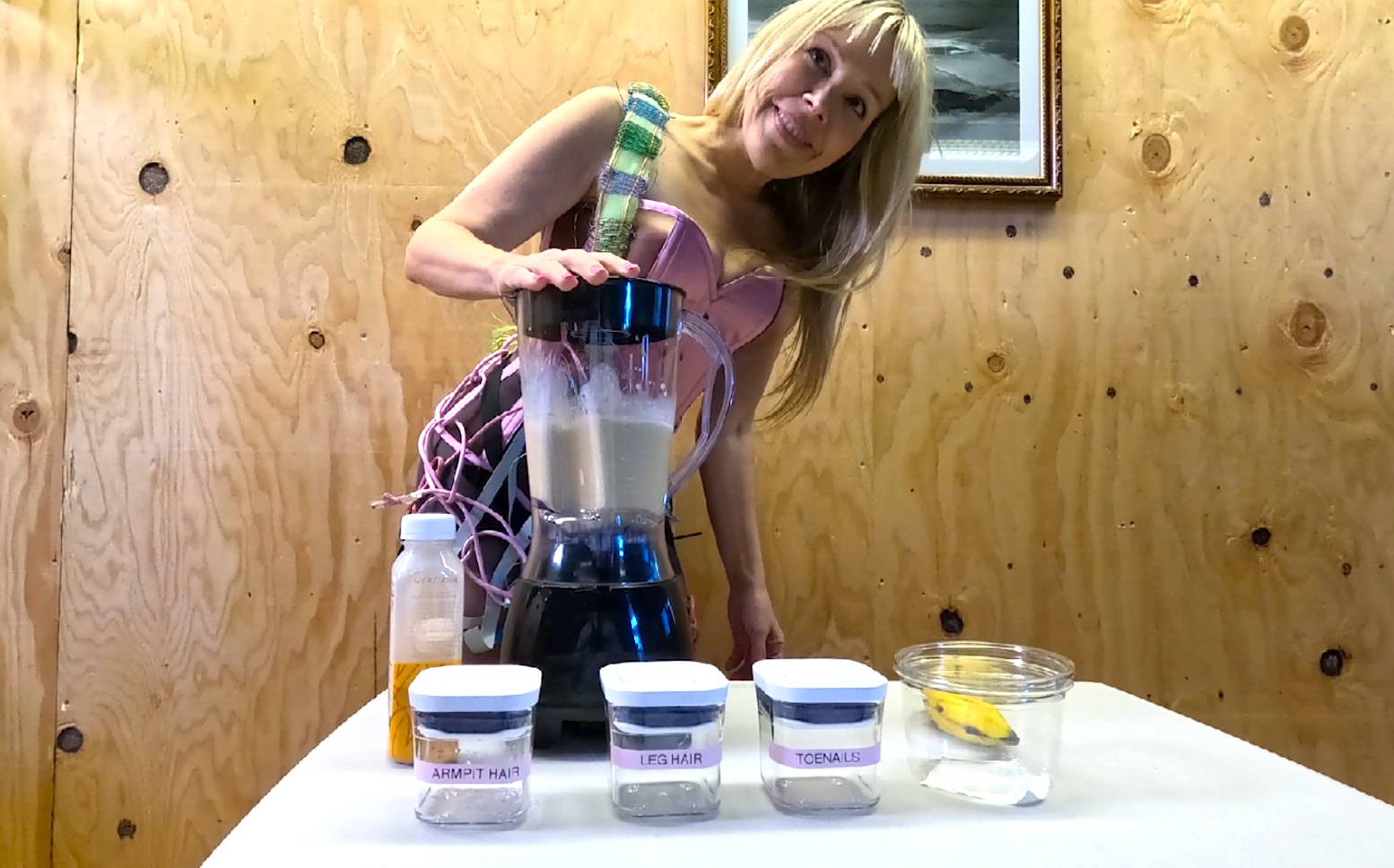
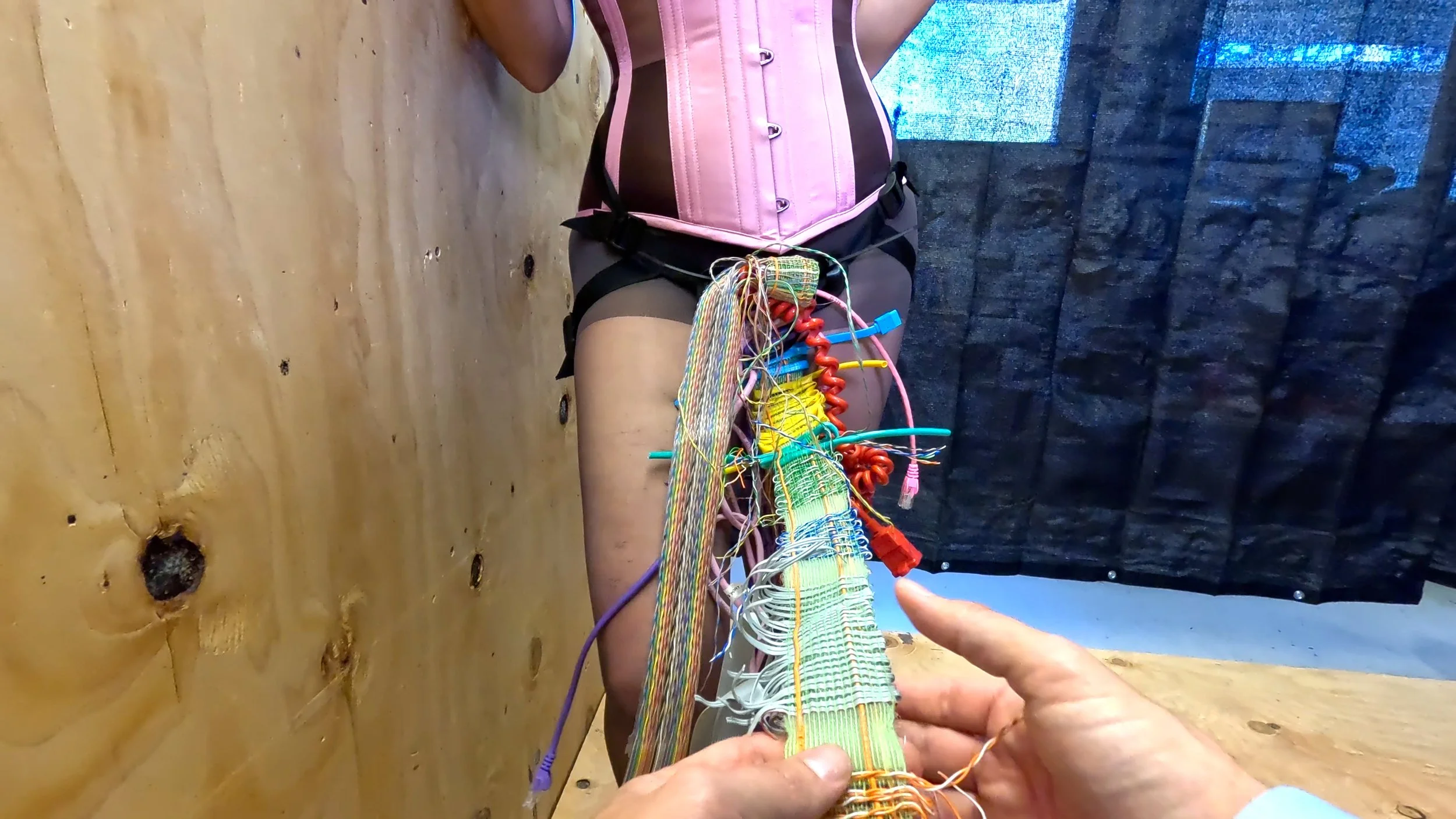
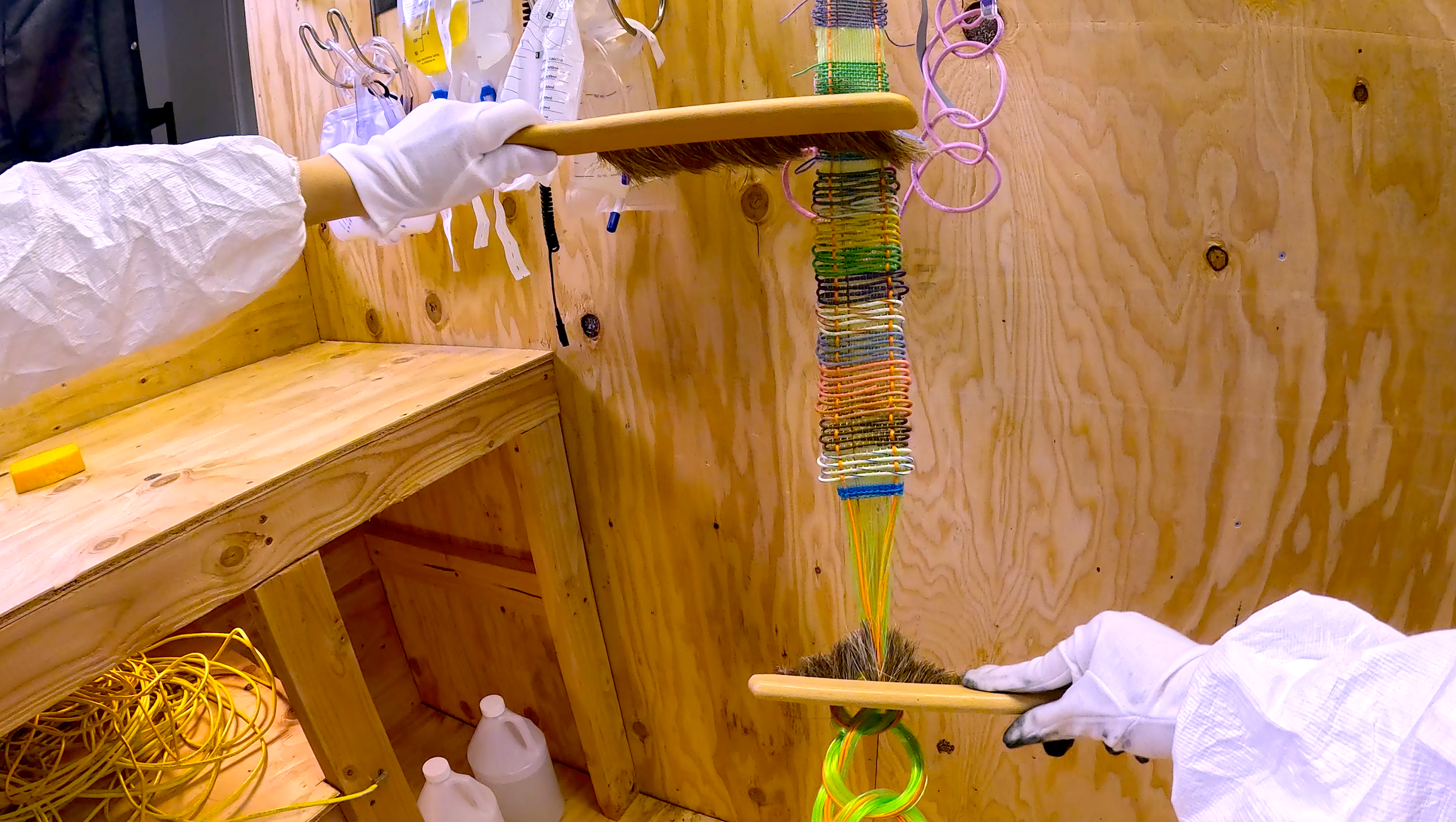
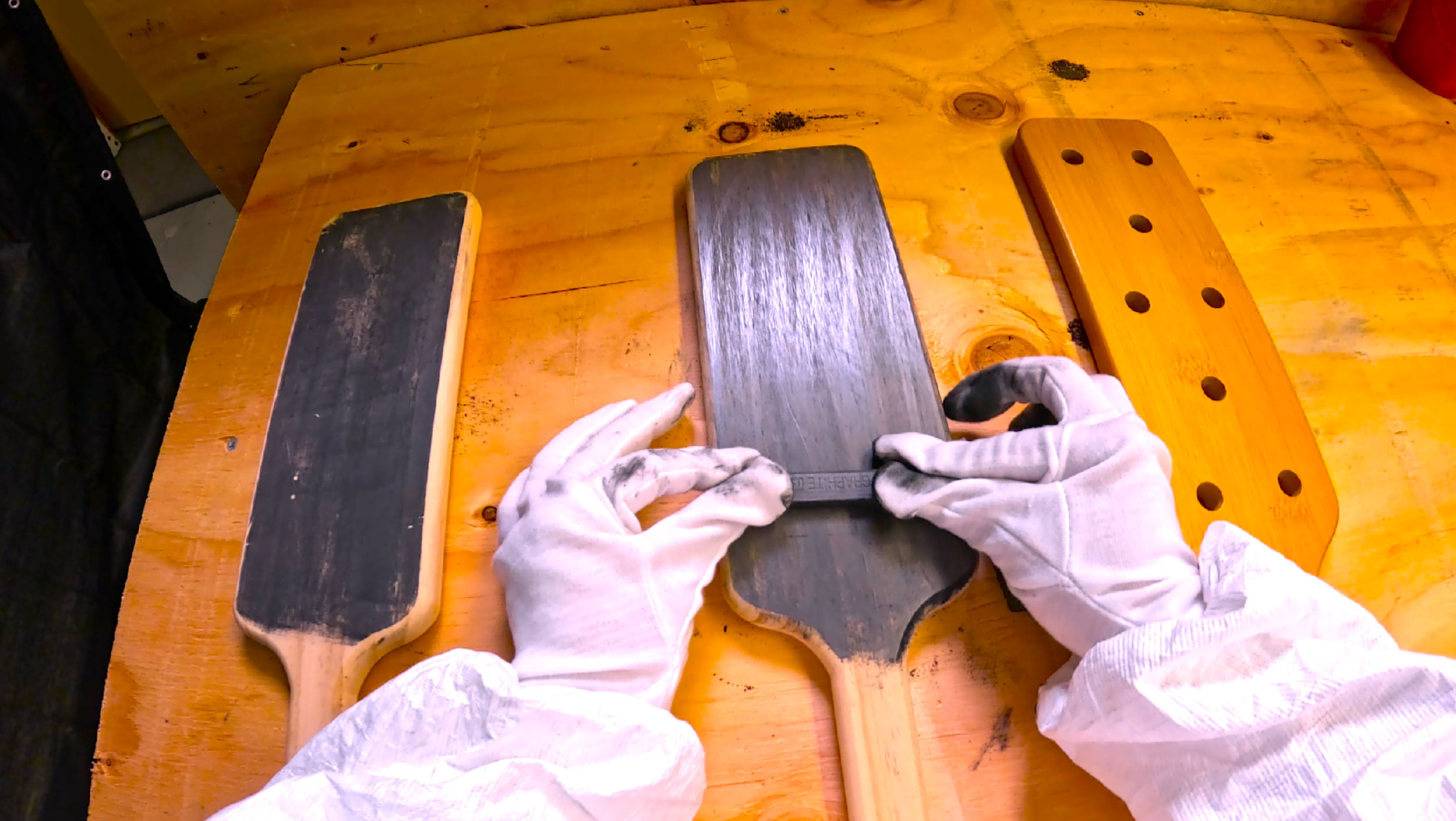
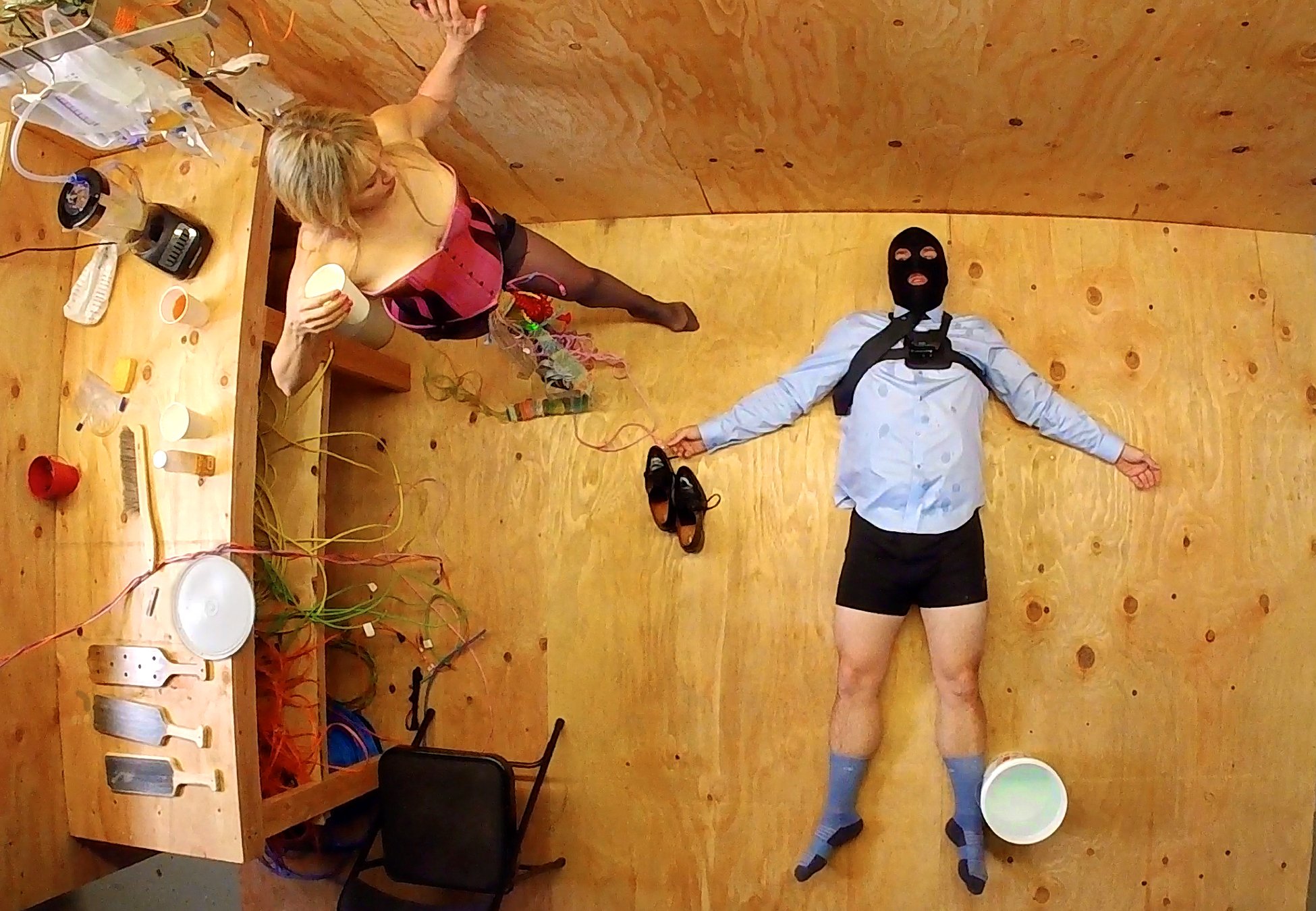
The man is hooded. The artist slaps him in the face. A four-foot whip woven from electronic waste dangles from her strap-on harness. She dips it into lithium-rich water and flogs him repeatedly. She spanks him with graphite-coated wooden paddles. This is a series of intimate humiliations, administered via the residue of extractive processes and the artist’s own body.
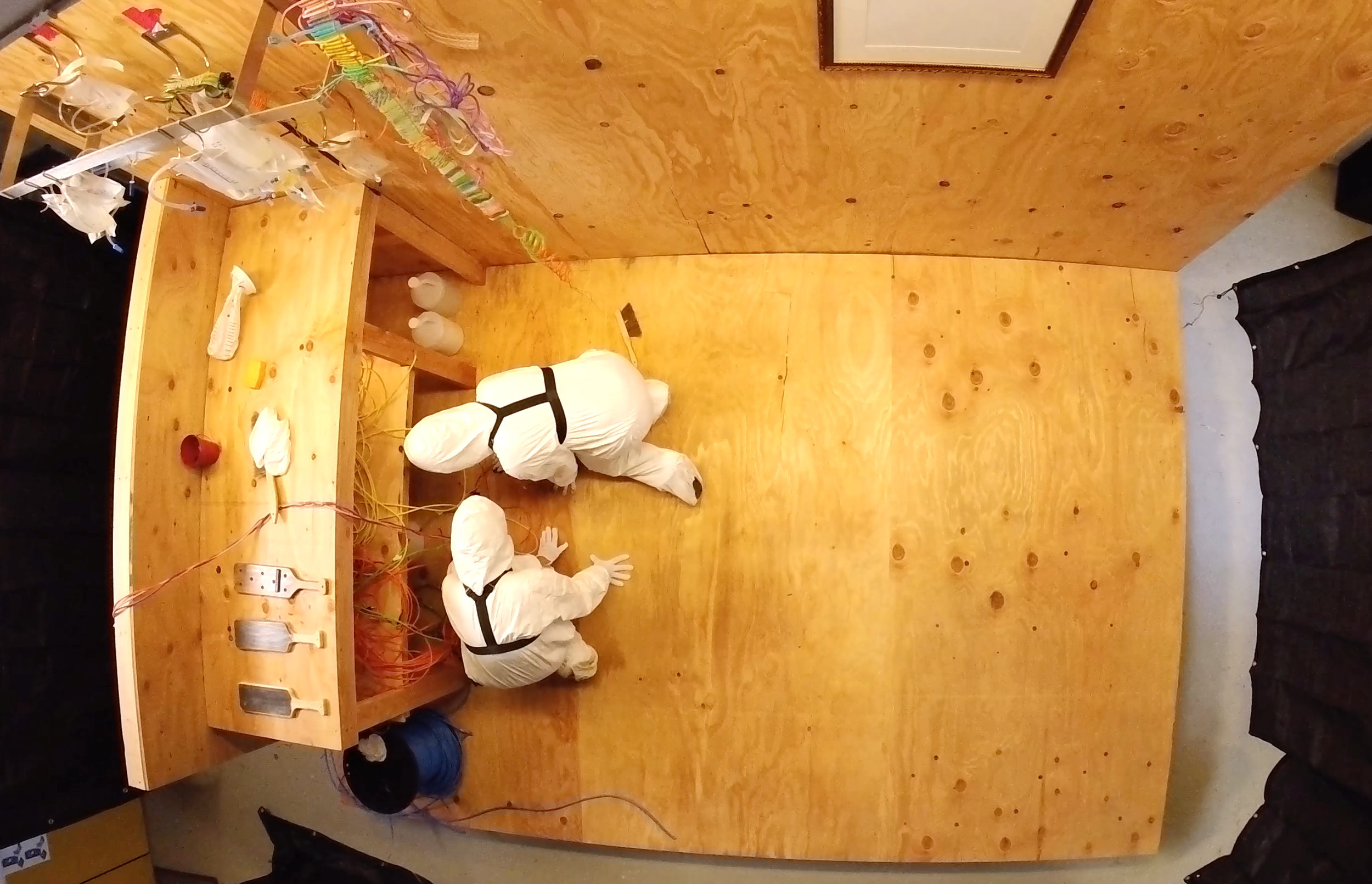
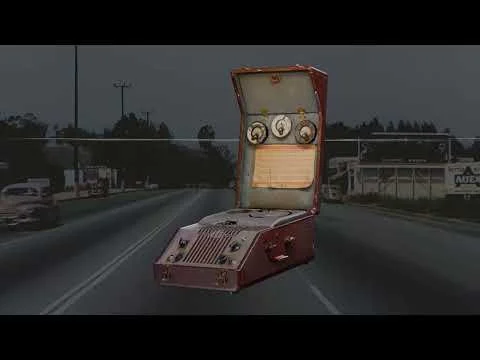
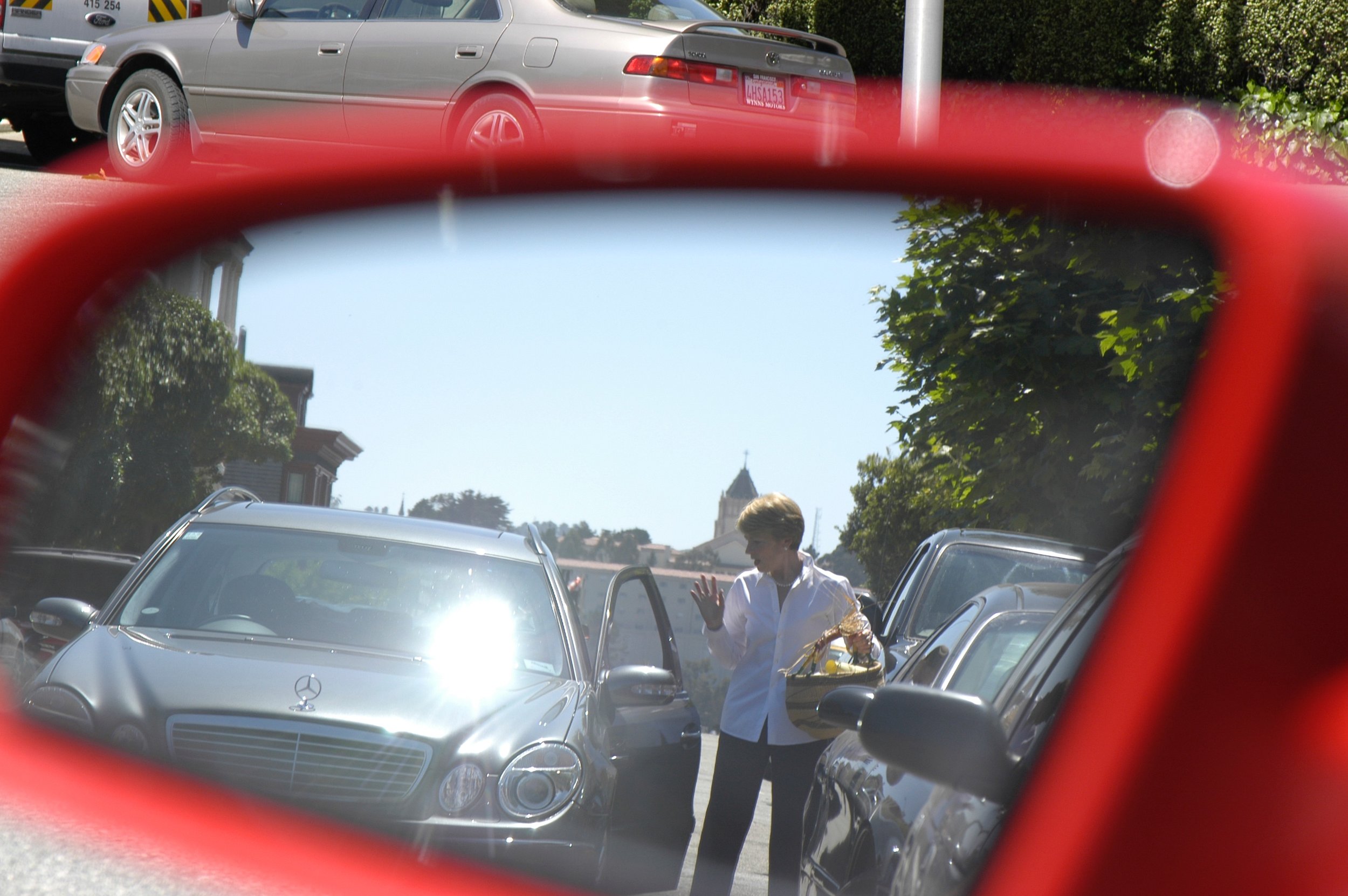
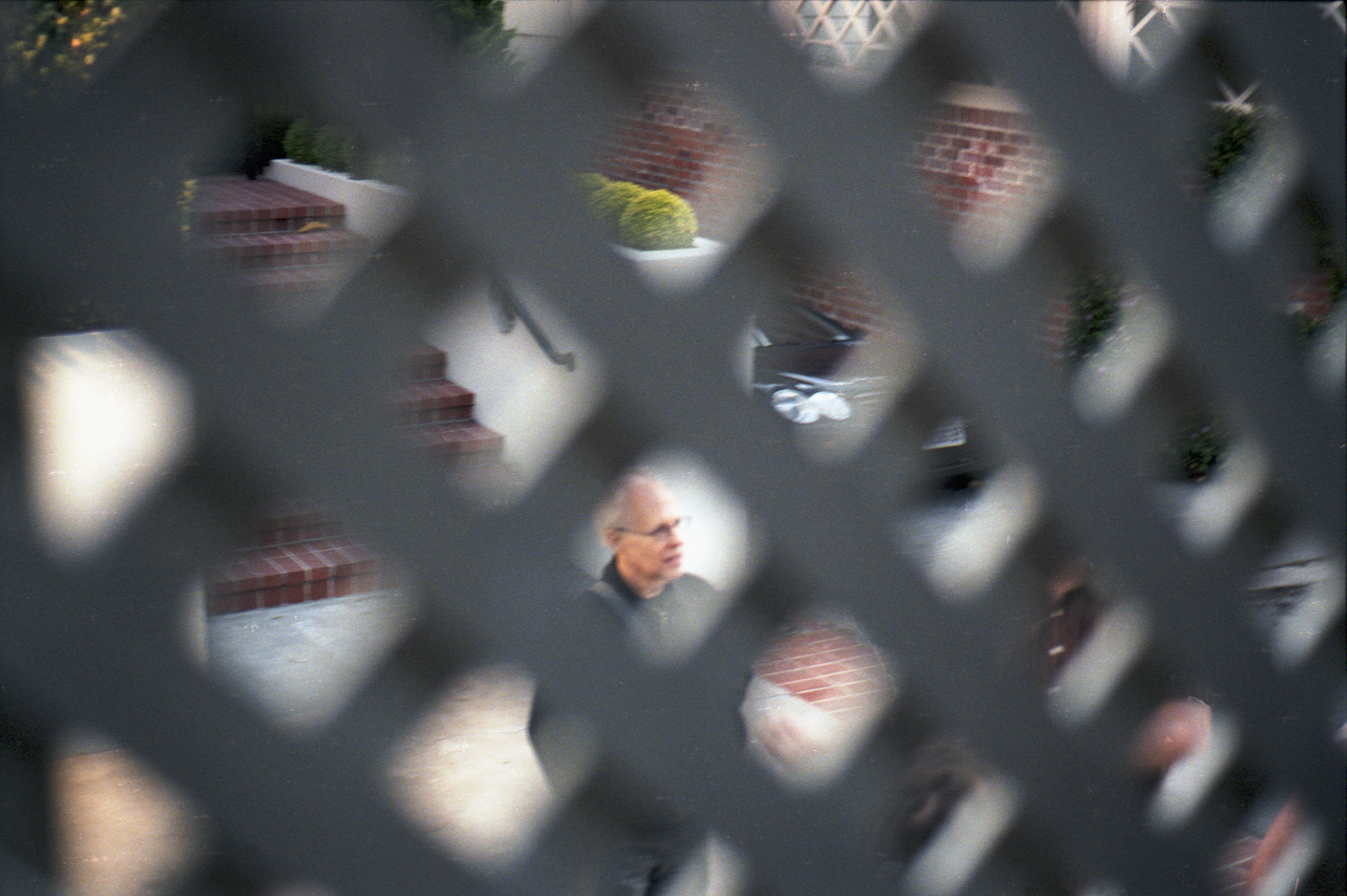
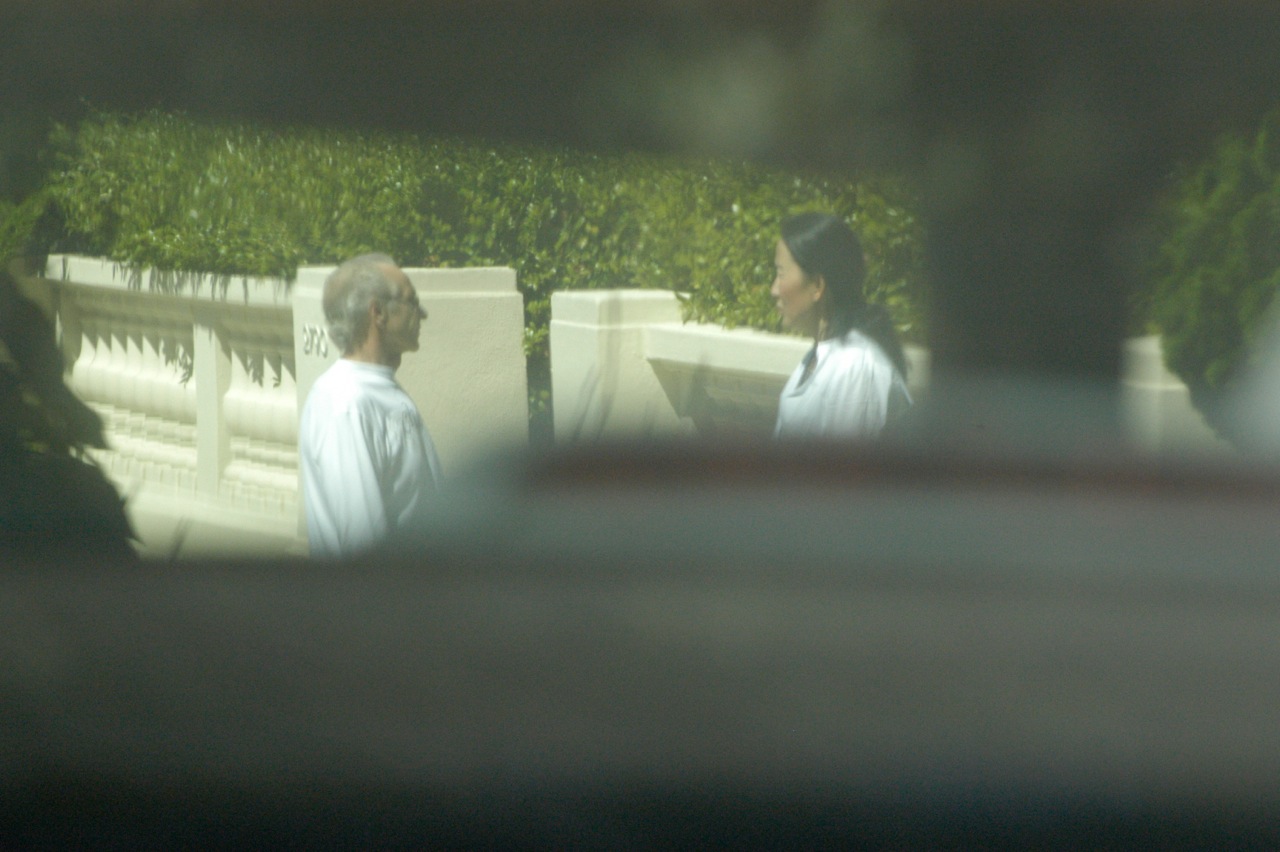
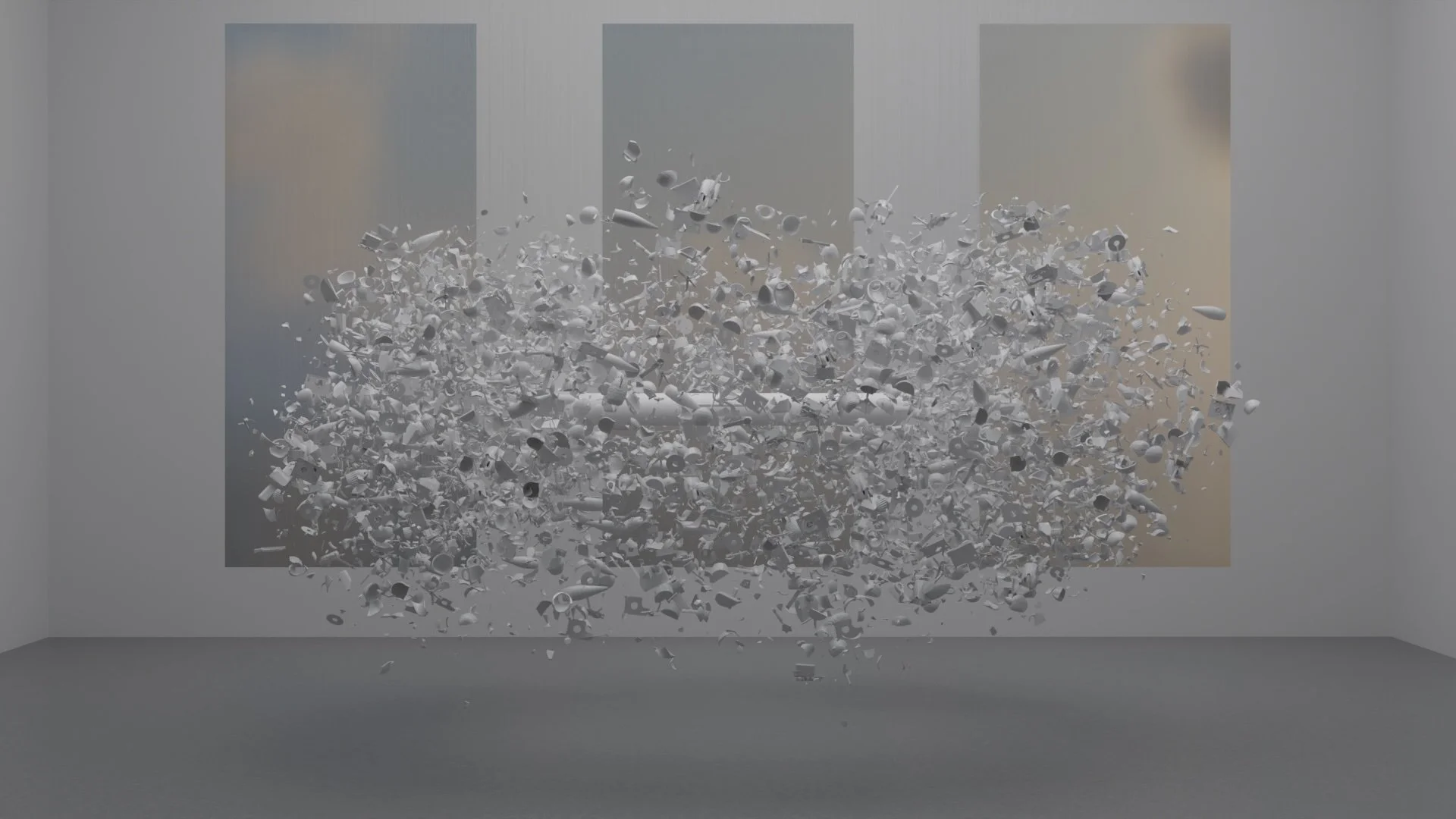
In the sculptural installation of Hard Reset, visitors are invited to stand in the same fabricated clean room where artist Jill Miller performed the eco-humiliation ritual. Her subject: an anonymous executive who has willingly sought out her punishment. On the plywood stage, visitors see tools created from the detritus of technological development. They hear the sound of Miller’s voice, workers producing a whip, the impact of the paddle, and the gasps of the executive. Embedded screens replay video from the surveillance cameras and body cameras that captured the scene. But to witness this performance, visitors must move into the same positions as the workers, executive, and artist. Are they standing in the site of retribution or the scene of the crime?
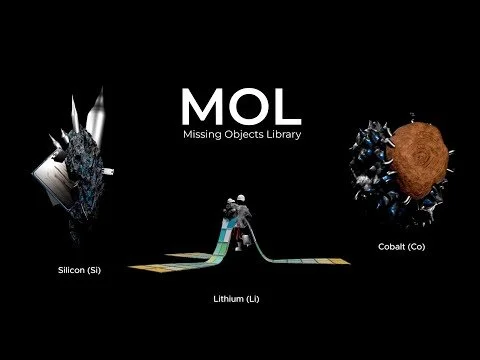
In preparation for the performance, Miller visited mining archives, lithium-enriched springs, and lithium evaporation ponds, tracing the materials and extraction processes that underpin today’s technological development. She inverted the purpose of these materials, redirecting their impact–even if momentarily–back to the body of those who might be responsible. Miller trained in BDSM houses in San Francisco and Los Angeles to develop eco-humiliation techniques as part of a disciplined practice grounded in its own ethics and performance language.
Across from the plywood stage, a small screen reveals the process by which Miller solicited executives: a fully transparent profile on a dating app. Screenshots reveal the fantasies of penance and pleasure that executives, both real and aspirational, imagine as punishment for their environmental degradation. Hard Reset does not offer a clean fantasy of justice. It sits with the messiness of accountability. Can people who profit from digital technologies be made answerable for the ecological devastation via the erotic disciplining of the body? The viewer is offered the pleasure of watching, judging, laughing, and feeling clever in the space of art, but the piece also routes around a more ordinary refusal: most of us know our technologies come at a cost, and most of us cannot give them up. And the artist is also complicit: the ritual offers an immediate satisfaction of symbolic punishment, while leaving open the uncomfortable question of whether ecological performance itself can produce any measurable change.